

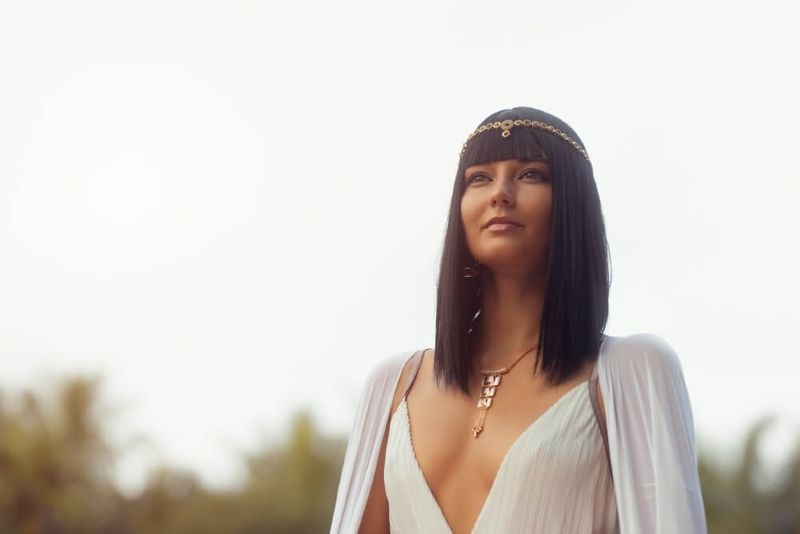
The interest in Ancient Egyptian hairstyles continues to inspire today's fashion and beauty enthusiasts. These hairstyles not only symbolized beauty but also a person's societal status, religion, and/or culture. Over the course of Egypt's history, people developed unique ways to style their hair. From elaborate hairpieces such as wigs to detailed braids, hairstyles have typically been a significant part of one's personal grooming and a unique way to express oneself culturally.
A major source of inspiration for today's hair fashion can be traced back to Cleopatra's hair; today's hair trends often borrow from her style. In addition to being important for individual beauty, historical Egyptian hairstyles provide evidence of beauty trends in Ancient Egypt. They illustrate that beauty, spirituality, and social status were interconnected in Ancient Egyptian society.
Both men and women spent a great deal of time grooming and dressing their hair in Ancient Egypt. Men and women styled their hair in many different ways, including elaborate braids and/or beads, and luxurious wigs. The influence of Ancient Egyptian hairstyles can still be seen today in fashion shows, new hair-braiding techniques, and recreations of historical times.
By looking at the hairstyles of ancient Egyptians, we can see how they used their styles to express who they were as individuals and to demonstrate their beauty and elegance. The hairstyles worn by ancient Egyptians indicated age, occupation, and social standing.
Wigs have been a very popular way for Egyptians to style their hair. Many ancient Egyptians shaved their heads for hygiene and comfort due to the heat of the desert, and wore a variety of wigs made from various types of hair (such as human hair, goat hair, wool, or plant fibres). Wigs were also used to represent the different classes of society, and people wore styles dictated by their social rank. For example, wealthy Egyptians wore exquisite wigs that were far more elaborate than those of the working class.
Wearing wigs also offered protection from the sun, a major benefit to the ancient Egyptians because it enabled them to change their look throughout the day, depending on the event they were attending. This practice had a significant impact on the beauty trends of ancient Egypt, driven by both practical considerations and luxury.
Another example of hairstyles in ancient Egypt was intricate braided styles. The braids would be elaborately woven, often adorned with beads, shells, or even gold and silver.
A child's hairstyle often featured a special type of braid called a side-lock (also called a lock of youth). It was worn only until adulthood (age 14), as it represented childhood.
For adults, braided hairstyles would convey an image of refinement, grace, and sophistication. These long, braided wigs of the royal women hung down over their shoulders, and these hairstyles continue to provide the foundation for some of today's hairstyling techniques, serving as a classic example of creative expression.
Don’t miss out: Traditional Egyptian Braids That Still Shape Hair Culture
Cleopatra was a powerful beauty icon. Her hair is continually recreated by stylists, designers, and beauty fanatics around the globe.
Cleopatra’s iconic hairstyle features smooth, straight hair in a blunt bob with bangs that beautifully frame the face, offering a stylish, regal appearance.
This style was also complemented by ornate headwear, golden ornamentation, and opulent make-up. Cleopatra’s look epitomised the splendour of ancient Egyptian hairstyling and underscored the monarch's prominence.
Today, numerous celebrities and fashion designers (particularly for event themes, runway collections, or historical fashion) replicate this Cleopatra-inspired hairstyle.
Beyond hairstyles, beauty trends in ancient Egypt greatly influenced modern culture. These ancient civilizations placed great value on personal grooming, using oils, perfumes, and natural dyes to enhance their appearance.
Jewelry accessories, such as jeweled hair pins, gold bands, and decorative combs, were frequently used by the hundreds of thousands of individuals who styled their hair this way in ancient Egypt to add extra flair to these elaborate hairstyles. The sense of beauty and opulence created by these types of accessories shows that stories are the same as what we witness in modern-day beauty culture.
Many of today’s popular braided hairstyles and fashion looks have their roots in ancient Egyptian braids as well, showing us that over 2,000 years later, we still see many similarities in how we express ourselves through fashion and beauty.
In ancient Egypt, hair held spiritual and cultural significance across society, and the Egyptians used it to communicate religious beliefs, social status, and individual identity. For example, priests would shave their heads to symbolize their spiritual purity, while members of regal families or noblemen wore extravagant wigs to symbolize their wealth and power. These contrasting hairstyles show how much hairstyles influenced ancient Egyptian history by shaping the development of Ancient Egyptian society.
In Ancient Egypt, hair was often used in ceremonies or celebrations. For example, during the festival of Ipet, people often wore specially coiffed wigs or intricately braided hairstyles to show appreciation and gratitude to the gods.
These examples demonstrate the critical role that ancient Egyptian hairstyles played as a fashion choice and as a cultural statement.
Read Next: Unlocking Egyptian Dreadlocks: Ancient Styles & Secrets
The classic simplicity of Ancient Egypt’s hairstyles remains relevant today; hairstylists often incorporate symmetrical braids, sleek bob cuts, and embellishments in modern styles.
Fashion designers also look to Cleopatra for inspiration when designing extravagant looks for their runway shows. Egyptian braiding styles have remained popular in today’s beauty industry for their beautiful, adaptable nature.
Beauty professionals also confirm that the ancient Egyptian ideals of beauty, including the use of natural oils, taking care of your scalp, and the use of decorative accessories in your hair, still influence modern-day beauty standards through these continued traditions established by the ancient Egyptians and how they continue to determine how we define what is considered beautiful today.
Ancient Egyptian hairstyles have left an enduring legacy as one of the most captivating aspects of all historical systems of beauty. Through elaborate wigs and braiding styles, Egyptian hairstyles reflected a person's social status, spirituality, and artistry.
Throughout ancient Egypt, hairstyles became an increasingly important means of demonstrating identity and elegance, evolving from simple grooming practices into powerful symbols of both dignity and refinement. Though Cleopatra's hairstyle has become somewhat legendary, it still inspires many people today, reinforcing the idea that traditional forms of beauty continue to shock and captivate modern fashion.
The development of hairstyles within the context of historical Egyptian culture was certainly a contributing factor in the creation of many of history's most recognizable forms of beauty. Furthermore, the historical Egyptian approach to grooming and developing one's style will continue to influence people worldwide.
To an Egyptian, their Hairstyle, or Hairdo, showed who they were in society - social class, level of wealth, and religion/identity. Hairstylists used wigs, hairstyles, various braids, hair products (such as hair combs), etc., not only to indicate wealth and culture but also to protect their hair from the harsh climate in Egypt.
The Cleopatra Hairstyle is a straight bob with bangs cut straight across. The Bob is recognized as a classic hairstyle, representing beauty and elegance, and is among the most famous of all Ancient Egyptian hairstyles.
Yes. Wigs were very popular among the people of Egypt. Wigs protected theisun's heat and also allowed people to demonstrate the Egyptian hairstyles they preferred, based on personal preference and the r shaved scalps from the heat of the sun and also allowed people to demonstrate the types of Egyptian hairstyles they had, based on personal preference and the types of Egyptian hairstyles and wigs available at the time.
This content was created by AI